Model and tool runtime
Route work across LLM providers, tools, MCP-style resources, internal APIs, and custom business actions.
DropTicks Engine is the reusable architecture we use to design, build, and operate custom LLM workflows, AI integrations, and internal workstations.
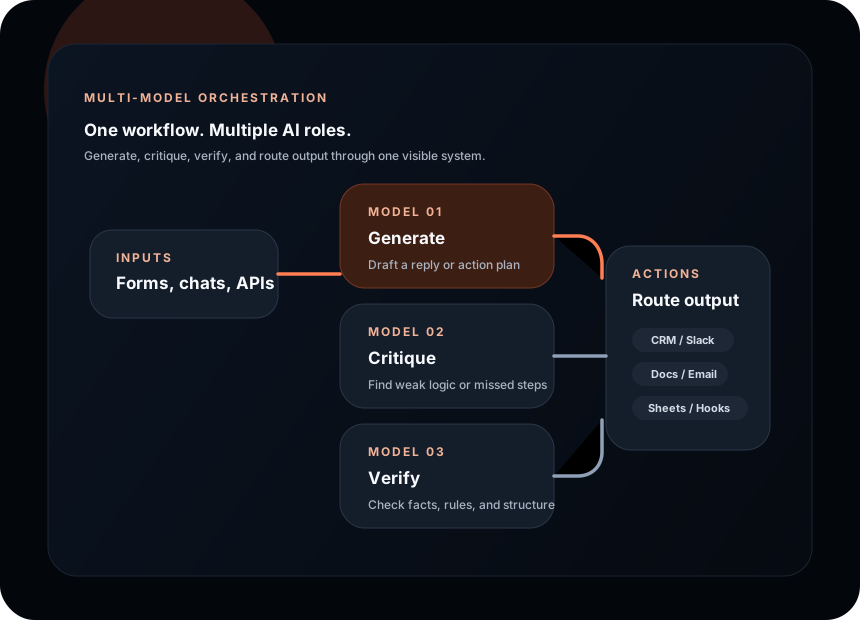
The Engine gives each project a consistent foundation: model access, tool connectors, retrieval, workflow state, evaluation, approvals, logging, and admin visibility.
Route work across LLM providers, tools, MCP-style resources, internal APIs, and custom business actions.
Connect documents, databases, app data, memory, and structured context without exposing everything to every workflow.
Track traces, score behavior, require approvals, enforce rules, and keep humans in the loop where risk is high.
Each build uses only the modules it needs, then extends them around the client workflow.
Provider abstraction, routing, fallback, cost visibility, and usage limits.
CRMs, databases, files, SaaS apps, webhooks, MCP servers, and custom APIs.
RAG, document indexing, metadata, permissions, memory, and source-aware answers.
Regression cases, output checks, retrieval scoring, tool-use tests, and review queues.
A company does not need a fresh architecture every time it adds AI to a workflow. It needs a proven base that can be adapted to different data, tools, permissions, and user roles.
The Engine is not a separate SaaS promise yet. It is the structured foundation DropTicks uses when building serious AI systems for teams.
Role-based tools for sales, support, operations, research, admin, and content teams.
Multi-step workflows with retrieval, tool use, validation, and human approval.
Reusable infrastructure behind customer-facing AI products and creator tools.
Connect AI to business systems while keeping data access and actions controlled.
If your team needs a custom AI workstation, integration layer, or product workflow, the Engine gives us a stronger base to design from.